


In this sub-section, I will use Voyant Tools to take a closer look to the Latin and Estonian versions of the text presented in the Richard Kleis’s book. The purpose of using the application is to find out what different kind of information can we collect out of these two texts. The main questions are on how many different word forms in total with different meanings are in the Liber Primus original text and translation and how many words are seemingly correlated to each other, meaning how many times the most common words in the translation are used in both texts.
In order to reveal this, I am using Voyant Tools to create word clouds for both versions with 25 and 50 most common words. We can then take a closer look at the table 4 to see the 25 most common words in both languages and find their correspondences, which are brought out in the table 5. To see the transcriptions of the Liber Primus in Latin refer to the annex 6 and for the transcription in Estonian refer to annex 7 on the thesis paper.
Followingly, I bring out the word clouds it created:
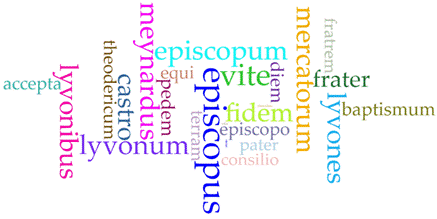
Figure 7. VT Latin version, 25 words
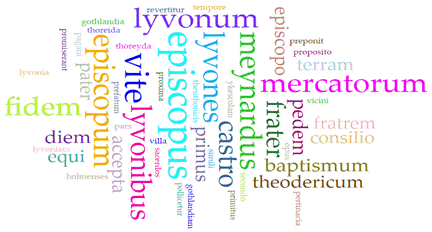
Figure 8. VT Latin version, 50 words
In the figure 7. We can see the 25 most common Latin words of the corpus and on the figure 8. 50 most common words. In total there was 987 words and 691 unique word forms, which means that 961 words appeared without any repetition. Voyant Tools shows also the vocabulary density of 0.700 and readability index of 19.298. It also notes that the average word count per sentence is 20.6 and that the five most common words were vite (5); episcopus (5); meynardus (4); mercatorum (4) and lyvonum (4).
Secondly, we do the same analysis with the Estonian translation:
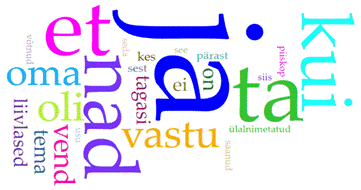
Figure 9. VT Estonian version, 25 words
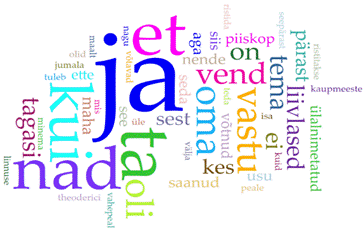
Figure 10. VT Estonian version, 50 words
In the figure 9. We can see the 25 most common Estonian words of the corpus and on the figure 10. 50 most common words. In total there was 1124 words and 722 unique word forms. The shown vocabulary density is 0.642 and readability index is 17.494. The average word count per sentence is 22.9 and the five most common words were ja (54); ta (23); et (21); nad (17); kui (17).
These 5 words: ja (and); ta (he/she); et (to); nad (they); kui (if) are all considered as stop words which means I have to get rid of them and do a second test to get more accurate result. To not run into this problem again I took out the following words:
- ja – and
- kui – if
- et – to
- nad – they
- on – are
- ta– he/she
- sest – because
- ei – no/negation
The second test excluding the stop words shows that the 5 most frequent words in the corpus are vastu (10); vend (8); tagasi (7); liivlased (7) and pärast (6). In this instance the included words also show different word clouds:
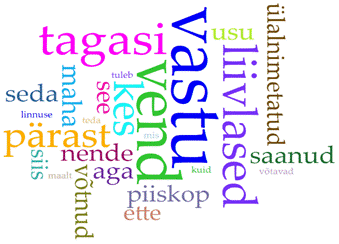
Figure 11. VT Estonian version, 25 words
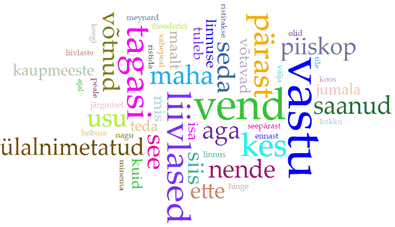
Figure 12. VT Estonian version, 50 words
With the gathered words from Voyant Tool I take 25 most common from both languages and create a table to see if the most used words are mainly the same or if we can see words with rather different meanings. For that I translate all the terms in English and give the cases they are presented in if necessary. The lists with 50 most common words are supplementary added in the annex 10 and annex 11, to avoid excessive word count for this analysis
| Term EST | Count | Term LAT | Count | ||
| vastu | 10 | against | vite | 5 | vine-branch (ablative) |
| vend | 8 | brother | episcopus | 5 | bishop |
| tagasi | 7 | back | meynardus | 4 | Meynard |
| liivlased | 7 | Livonians | mercatorum | 4 | merchant (genitive pl) |
| pärast | 6 | later | lyvonum | 4 | Livonias (genitive) |
| kes | 6 | who | lyvonibus | 4 | with Livonians (ablative) |
| võtnud | 5 | Taken | lyvones | 4 | Livonians |
| ülalnimetatud | 5 | above mentioned | frater | 4 | brother |
| usu | 5 | the belief (genitive) | fidem | 4 | chord (accusative) |
| siis | 5 | then | episcopum | 4 | bishop (accusative) |
| see | 5 | this/that | castro | 4 | castle (dative) |
| seda | 5 | this/that (partitive) | theodericum | 3 | Theoderic |
| saanud | 5 | have become | terram | 3 | land (accusative) |
| piiskop | 5 | bishop | primus | 3 | the first |
| nende | 5 | theirs | pedem | 3 | foot (accusative) |
| maha | 5 | down | pater | 3 | father |
| ette | 5 | in front | fratrem | 3 | brother (accusative) |
| aga | 5 | but | equi | 3 | horse (genitive) |
| võtavad | 4 | they are taking | episcopo | 3 | bishop (dative/ablative) |
| tuleb | 4 | comes | diem | 3 | day (accusative) |
| teda | 4 | him/her | consilio | 3 | advice (dative) |
| mis | 4 | what/which | baptismum | 3 | baptism (accusative) |
| maalt | 4 | from land | accepta | 3 | welcome |
| linnuse | 4 | the castle (genitive) | ykescolam | 2 | Ykesküla (accusative) |
| kuid | 4 | however | villa | 2 | country house |
Table 4. The Common Words on VT
Examining the table, we see that there are certain words in Estonian which are used fairly often, for example vastu (10) and vend (8), whereas in addition to two mentions vite (5) and episcopus (5), most latin words are used only 3-4 times in the Liber Primus. It is also noticeable that most of the words in the top 25 most common words appear fairly different from the counter language. However, there are 5 words that are more frequent throughout the first book. Put in nominative singular; vend (brother), liivlane (Livonian), piiskop (bishop), maa (land) and linnus (castle),these words in different forms make up a big part of the text.
| 1.vend | 8 | brother | fratrem | 3 | brother (accusative) |
| frater | 4 | brother | |||
| 2.liivlased | 7 | Livonians | lyvones | 4 | Livonians |
| lyvonum | 4 | Livonias (genitive sg) | |||
| lyvonibus | 4 | with Livonians (ablative) | |||
| 3.piiskop | 5 | bishop | episcopus | 5 | bishop |
| episcopum | 4 | bishop (accusative) | |||
| episcopo | 3 | bishop (dative/ablative) | |||
| 4.maalt | 4 | from land | terram | 3 | land (accusative) |
| 5.linnuse | 4 | the castle (genitive) | castro | 4 | castle (dative) |
Table 5. The Most Common Words on VT
Although many of the most commonly used words differ in the two versions, there are always words that must unintentionally appear in both versions in order to convey the text in its original form. These words do not conclude us just a small overview of the first book but rather give an idea of the overall theme of the chronicle as these words can be well used to summarize the key points of it. In these two versions, there are seemingly five more prominent common words between the two versions (ref. table 2.). But to highlight also the differences between the texts, we should pay attention to the different word forms in them. In total there are 691 different word forms in the Latin version of Liber Primus and 722 in the Estonian version. The differences in word forms between the two versions are obviously due to the differences between the languages and the more complex grammar of Estonian, adding a large number of different word forms.